
Master Application, Network & Device Security – Essential
Application security, network security, device security, vulnerabilities and defensive techniques
Start Learning
Join learners who transformed their careers with MITS Edge.
Program Overview
Application, Network & Device Security. Application security, network security, device security, vulnerabilities and defensive techniques. Runs 2.5 months over 100 contact hours. This course is sold on its own and also forms part of larger programs.
Course Highlights
- 100 hours of classroom training
- Certificate on completion
- Can be taken on its own or inside a program
Minimum Requirements
- Cybersecurity Fundamentals
- Laptop or desktop with internet access
Who is this for ?
- Beginners and students
- Working professionals adding one skill
- Career changers
Industry-Recognized
Certification
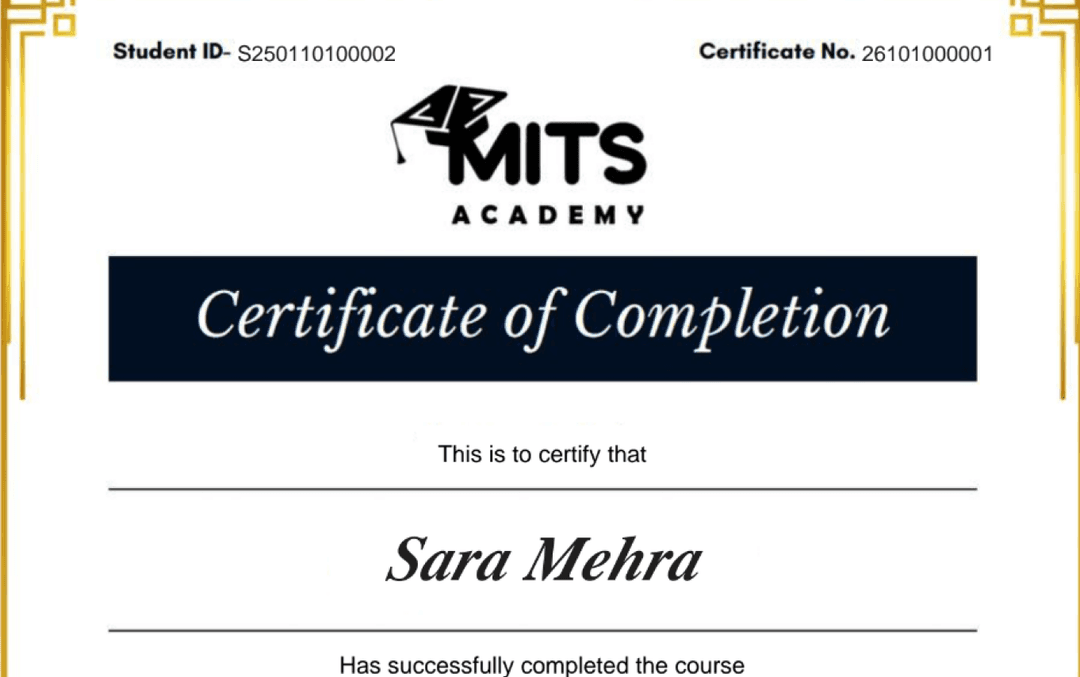
Upon successful completion, you receive a certificate of completion for the Application, Network & Device Security – Essential program that you can share with employers and add to your LinkedIn profile — a record of the hands-on skills and projects you completed.
- Verifiable ID: Unique credential link for LinkedIn.
- Skill Validation: Proof of hands-on project completion.
- Corporate Branding: CO-branded with your company logo.
Student Reviews
Why learn this online
Cybersecurity has a persistent, well-documented shortage of qualified professionals, which keeps demand high for motivated newcomers. Learning online through live sessions and hands-on labs lets you build networking and security fundamentals, practice with real tools, and work toward CompTIA Security+ — the combination that opens entry-level SOC analyst roles.
Who this is for
- ✓Detail-oriented, process-driven learners
- ✓IT professionals moving into security
- ✓Career switchers from compliance or audit
Career outcomes
- Security Analyst
- SOC Analyst
- Information Security Associate
- GRC Analyst
Frequently asked questions
Is the Application, Network & Device Security – Essential course online or in person?
The Application, Network & Device Security – Essential program is delivered live and online with instructor-led sessions, so you can join from anywhere in the US, Canada, or beyond. Sessions are interactive and recordings are available for review.
How long is the Application, Network & Device Security – Essential course?
The Application, Network & Device Security – Essential program runs for 2.5 Months. Cohorts are scheduled in the evenings and on weekends to fit around a full-time job.
What level is the Application, Network & Device Security – Essential course — is it suitable for beginners?
The Application, Network & Device Security – Essential program is pitched at a intermediate level. Some prior familiarity helps, and the curriculum builds toward job-ready skills.
Do I get a certificate after completing Application, Network & Device Security – Essential?
Yes — you receive a verifiable certificate of completion for the Application, Network & Device Security – Essential program, which you can share with employers and add to your LinkedIn profile.
Does the Application, Network & Device Security – Essential course include placement or career support?
Yes. MITS Edge programs include career support — resume reviews, mock interviews, and job-search guidance aligned to the US and Canadian hiring markets.
Do I need any prior experience to join Application, Network & Device Security – Essential?
Recommended prerequisites: Cybersecurity Fundamentals; Laptop or desktop with internet access.
Can I get into cybersecurity without experience?
Yes. Many enter through an adjacent IT role or by building a strong lab portfolio. A SOC analyst position is the most common entry point.
What certification matters most for security?
CompTIA Security+ is the most widely recognized entry credential, with Network+ helpful first if you are new to IT.
Related Courses
Cyber Defence & Incident Response – Essential
VAPT, network defence, incident response and security testing
Cybersecurity Fundamentals – Essential
Cybersecurity concepts, threats, vulnerabilities, CIA triad, basic network and device security
Cybersecurity Tools & Technologies – Essential
Python security libraries, OS, sockets, monitoring, Pandas, Nmap and security tooling
Ethical Hacking – Essential
Ethical hacking concepts, reconnaissance, vulnerability identification, security testing